
Editorial Team · on 13 June 2026 · 7 min read · Last reviewed 13 June 2026
Brasserie dining originates from 19th-century France, where brasseries began as working-class beer halls before evolving into vibrant eateries offering casual yet high-quality French cuisine.
Key facts
- Brasseries emerged in Strasbourg in 1872, initially serving locally brewed beers.
- They spread to Paris by the late 19th century, becoming popular for their lively atmosphere and affordable meals.
- Traditional brasseries are open late, serving food continuously throughout the day.
- Brasserie dining often features classic French dishes like steak frites, onion soup, and escargot.
What distinguishes brasseries from other French eateries?
Brasseries differ from bistros and cafés primarily in their origins and scale. While bistros are smaller, neighbourhood establishments often run by families, brasseries were larger venues initially focused on beer production and consumption. They typically have a more industrial, spacious interior with zinc-topped tables and mirrored walls, reflecting their working-class roots.
Unlike bistros, which may close between lunch and dinner service, brasseries traditionally operate non-stop, catering to a broader range of patrons throughout the day. This continuous service model aligns with the brasserie’s historical role as a hub for socialising and dining at any hour. For more on the differences, see Brasserie vs Bistro: What's the Difference?.
How did brasseries evolve over time?
Brasseries first appeared in Strasbourg in 1872, capitalising on the region’s brewing traditions. The term “brasserie” comes from the French word “brasser,” meaning “to brew.” These early establishments were simple beer halls, serving locally crafted lagers to factory workers and locals alike. By the late 19th century, brasseries had spread to Paris, where they became fashionable gathering spots for artists, writers, and the burgeoning middle class.
In the early 20th century, Parisian brasseries expanded their menus to include hearty, affordable French dishes, appealing to a wider clientele. This period saw the rise of iconic brasserie dishes like steak frites and French onion soup. Post-World War II, brasseries became symbols of French culture, attracting tourists seeking an authentic dining experience. Today, brasseries worldwide embody this rich heritage, offering a taste of classic French cuisine in a lively, casual setting.
What are the signature dishes of brasserie dining?
Brasserie menus typically feature classic French dishes that are hearty, comforting, and often shared. Steak frites, a simple yet satisfying combination of steak and crispy fries, is a staple. French onion soup, with its caramelised onions and melted cheese, is another brasserie favourite. Escargot, cooked in garlic butter, offers a taste of traditional French cuisine, while cassoulet, a slow-cooked casserole of meat and white beans, exemplifies the brasserie’s focus on robust, flavourful dishes.
For more on these and other must-try brasserie dishes, see Top Brasserie Dishes to Try. Seafood also plays a significant role in brasserie dining, with dishes like moules marinières (mussels cooked in white wine and cream) and bouillabaisse (a Provençal fish stew) frequently appearing on menus. These dishes reflect the brasserie’s ability to cater to various tastes while maintaining a strong connection to French culinary traditions.
What is the typical brasserie atmosphere?
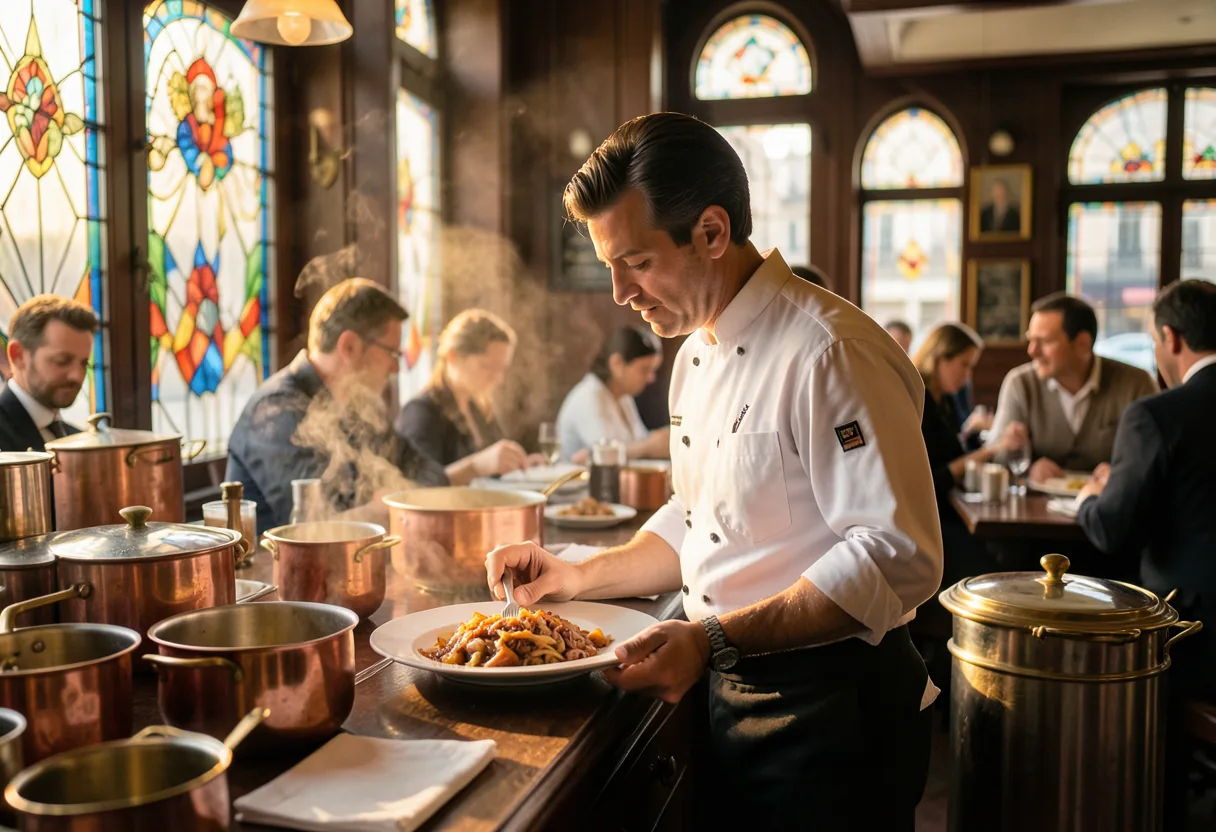
Brasseries are known for their lively, convivial atmospheres. The interiors often feature classic design elements like zinc-topped tables, mirrored walls, and ornate light fixtures, creating a nostalgic, Parisian ambiance. The continuous service model means brasseries are always lively, with patrons coming and going at all hours. This energy makes brasseries ideal for socialising, whether with friends, family, or colleagues.
For tips on recreating this atmosphere at home, see How to Create a Brasserie Atmosphere at Home. The staff in a traditional brasserie are typically friendly and efficient, contributing to the overall welcoming vibe. Brasseries often feature live music or other entertainment, adding to the lively atmosphere. Whether you’re stopping in for a quick coffee or enjoying a leisurely multi-course meal, the brasserie’s dynamic environment enhances the dining experience.
Think of a brasserie like a friendly, neighbourhood pub that serves fantastic French food. It’s a place where you can go anytime, day or night, and always find good company, great food, and a warm, inviting atmosphere. Just as a pub is a hub for socialising and enjoying local fare, a brasserie offers a taste of French culture in a relaxed, casual setting.
How do brasseries compare to other French dining establishments?
What are some iconic brasseries in Paris?
For more on these and other legendary Parisian brasseries, see Best Brasseries in Paris. Each of these brasseries offers a unique glimpse into the rich history and vibrant culture of French dining. Whether you’re a local or a visitor, experiencing the atmosphere and cuisine of these iconic establishments is a must for any brasserie enthusiast.
How has the modern brasserie adapted to contemporary tastes?
Modern brasseries have evolved to cater to contemporary tastes while preserving their traditional roots. Many brasseries now offer a blend of classic French dishes and innovative, modern cuisine. This fusion allows them to appeal to a broader audience, including younger diners and those seeking unique culinary experiences.
For example, some brasseries have introduced vegetarian and vegan options to their menus, reflecting the growing demand for plant-based dishes. Additionally, brasseries are increasingly focusing on sustainability, sourcing ingredients locally and reducing waste. This commitment to sustainable practices resonates with environmentally conscious diners and aligns with modern values.
Technology has also played a role in the evolution of brasseries. Many establishments now offer online reservations, digital menus, and contactless payment options, streamlining the dining experience. Social media platforms like Instagram and TikTok have further popularised brasserie culture, with visually appealing dishes and stylish interiors gaining traction online.
What role do brasseries play in contemporary French culture?
Brasserie dining offers a delightful blend of history, culture, and culinary excellence. Whether you’re enjoying a meal at a traditional Parisian brasserie or recreating the experience at home, the key is to embrace the lively, convivial spirit that defines these iconic establishments. So gather your loved ones, raise a glass of wine, and savour the rich flavors and traditions of French brasserie dining.
How can you experience authentic brasserie dining at home?
- Create the right atmosphere with zinc-topped tables, mirrored walls, and classic French decor.
- Prepare classic brasserie dishes like steak frites, French onion soup, or escargot.
- Set up a self-serve bar with a selection of French wines and beers to mimic the brasserie’s continuous service.
- Play French music or watch French films to enhance the ambiance.
- Invite friends and family to share in the experience, fostering a lively, social atmosphere.
To start your brasserie dining journey, consider visiting a local brasserie or experimenting with classic recipes at home. Embrace the spirit of conviviality and enjoy the rich, flavourful dishes that define this iconic dining experience. Whether you’re a seasoned food enthusiast or a curious beginner, brasserie dining offers a rewarding and enjoyable culinary adventure.
Frequently asked questions
What distinguishes a brasserie from a regular restaurant in France?
Brasseries originated in Northern France and specialized in serving beer. Unlike traditional restaurants, they often feature a casual atmosphere, copper cooking equipment, and a focus on hearty, locally-sourced dishes like steak-frites and onion soup.
How did brasseries evolve over time?
Brasseries started as working-class establishments in the 19th century. Over time, they expanded their menus to include a variety of French dishes and became popular with all social classes. Many brasseries also began serving wine alongside beer.
What role did brasseries play in French social life?
Brasseries served as social hubs where people gathered to eat, drink, and converse. They were often open late and provided a relaxed setting for both locals and visitors. Many famous artists and writers frequented brasseries, contributing to their cultural significance.
Are there any famous historical brasseries still in operation?
Yes, several famous brasseries remain open today. For example, Le Procope in Paris, established in 1686, is considered the oldest café and brasserie in the city. Another notable example is Brasserie Lipp, known for its literary clientele.